33 Years of Service, Spirit, and Scholarship at ESR
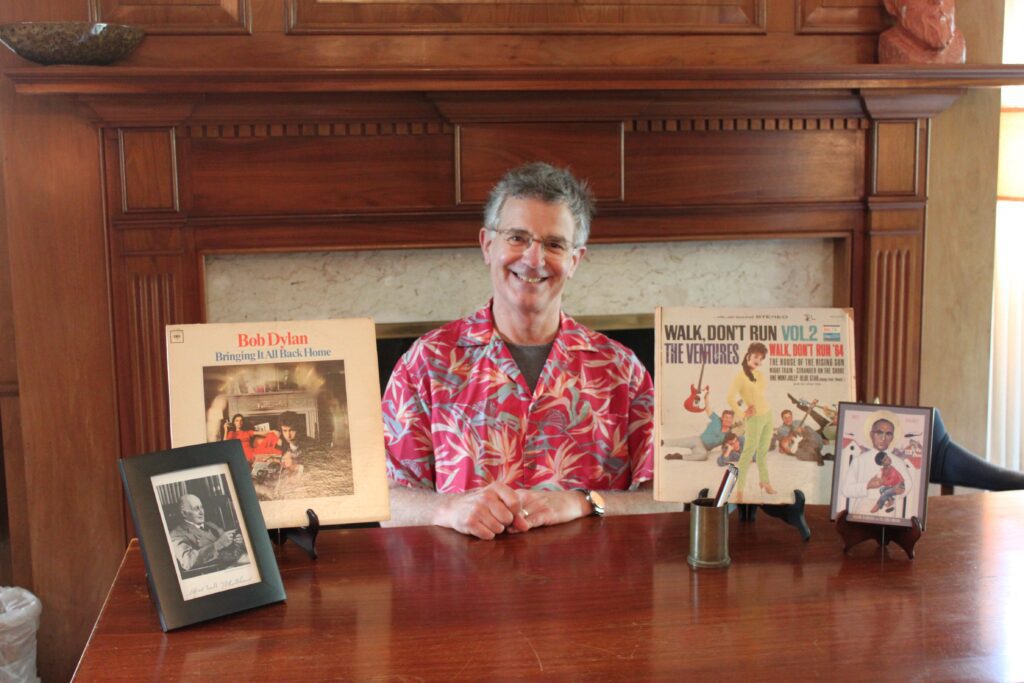
We share this conversation in loving memory of Professor Lonnie Valentine, a pillar of peace, reflection, and academic depth at the Earlham School of Religion. Three years ago, Lonnie graciously sat down for an interview to reflect on his 33 years of service at ESR. Though no words can fully capture his impact, this conversation offers a glimpse into the heart and mind of a beloved teacher, mentor, and friend.
Thirty years at ESR—that’s not easy! How are you feeling? You’re about to step away from something you’ve done for three decades. What’s going through your mind?
Lonnie: Well, first—it’s actually been 33 years! And no, it hasn’t been easy, but it’s been good, full of moments of truth and beauty. I feel mixed, bittersweet. I think of the many wonderful conversations I’ve had with students and faculty. And I also wonder how I, and ESR, might have done better.
Tell us about your first encounter with ESR. What brought you here?
Lonnie: I first discovered ESR through a guide to graduate programs in peace studies. I was a Quaker by then, but I hadn’t heard about ESR in my Meeting or Yearly Meetings on the West Coast. I believe I was the first student to attend ESR from Pacific Yearly Meeting. Recently, a generous donor created a scholarship for Quakers from California to study here—may more follow!
Curious, I came to visit and get a feel for the place. I remember sitting in on a class and being drawn in by the lively conversation. I felt welcomed by both faculty and students. It was clear that the school was invested in student learning and committed to challenging us to grow.
What are some of your most memorable moments from your time at ESR?
Lonnie: I’ll never forget my arrival. I drove up in my van to move in, and an ESR student came out to help me unload. Very friendly! As we talked, he asked about my interests. When I said “process theology,” he laughed and said, “Uh oh!”—but still helped me settle in.
When I got to my room, my new roommate wasn’t there yet. I saw a very large Bible open on a stand and thought, “Uh oh.” Apparently, he saw my books later and had the same reaction. And yet—we became good friends.
That experience really stuck with me. It reflects the theological diversity ESR has always valued. Over the years, I’ve learned from evangelical Friends, international students, and others across the spectrum. I hope ESR continues to be a place where people from a wide range of perspectives can come together, learn from one another, and grow.
How has ESR grown over the past 33 years?
Lonnie: ESR has continually responded to changes in religious life in the U.S.—drawing on the lived experience of faculty, students, alumni, and our Board of Advisors. While we remain rooted in spirituality and the Quaker testimonies, how we educate from that foundation has evolved.
We were early among seminaries in emphasizing spiritual formation. Given the Quaker understanding that all are called to ministry—and that ministry takes many forms—we shaped our programs to support both traditional and non-traditional paths. We added emphases within the M.Div. and M.Min. programs and created M.A. concentrations in Peace and Justice Studies, Quaker Studies, Bible, and Theology. More recently, we launched innovative degrees like the M.A. in Theopoetics and Writing and the M.A. in Peace and Social Transformation.
You’ve taught and mentored a wide range of students. What do you appreciate most about ESR students?
Lonnie: ESR has always welcomed students from diverse educational and life backgrounds. Some have had strong undergraduate training in religion; others have come from different disciplines—or no degree at all. What they all share is curiosity about the spiritual life, a willingness to study, and deep respect for others.
Peace Studies has been central to your life and work. What drew you to it?
Lonnie: My initial reaction is—why wouldn’t I be drawn to it?
My peacemaking journey began during the Vietnam War, when I served two years of alternative service in a maximum-security mental institution as a conscientious objector. There, I witnessed injustice on a systemic level. I got involved in draft counseling, anti-nuclear organizing, resisting the payment of war taxes, and public education on the dangers of radiation. That work led me to the Quakers. I remember being on a protest march—talking with someone about peace and spirituality—and they mentioned a Quaker Meeting nearby. I started attending, and joined Friends the same year I came to ESR.
The MAPST program is one of ESR’s most innovative. You helped bring it to life. What inspired it?
Lonnie: MAPST—the Master of Arts in Peace and Social Transformation—was born out of our desire to better connect reflection and action. We had already begun doing this through travel seminars and ministry practicums. MAPST took it a step further. Rooted in the Quaker belief that spirituality should lead to action, the MAPST program integrates practicum work throughout. It’s a model of embodied learning. We act based on our best insights, reflect on our actions, adjust, and try again. It’s a cycle that builds toward a more just and peaceful world.
Do you plan to continue your scholarship after retirement? What’s next?
Lonnie: Genevieve and I want to take a step back and discern what’s next—for each of us and together. Honestly, doing nothing for a while sounds good. That said, I do have two writing projects I hope to complete. One is a book exploring how process theology supports nonviolent social change. The other is on Quaker theology and the history of war tax resistance.
What words of encouragement do you have for new faculty members? And any parting thoughts for the ESR community?
Lonnie: ESR is a community of learners, rooted in spirituality and grounded in the Quaker tradition. We’re called to go deep—together. So, let’s keep learning. Let’s stay in touch.
Thank you, Lonnie. Your life and work have shaped generations of students, faculty, and friends. May your legacy continue to inspire bold peace, deep learning, and spiritual courage.